

A pilonidal sinus, commonly known as a hair follicle infection, is a chronic skin infection that usually occurs in the gluteal cleft (the groove between the buttocks). It is characterized by hair shedding from the body entering the skin through sweat and friction, accumulating there, and forming cysts or abscesses. This condition can cause inflammation and discharge from time to time by forming tunnels (sinus tracts) under the skin.
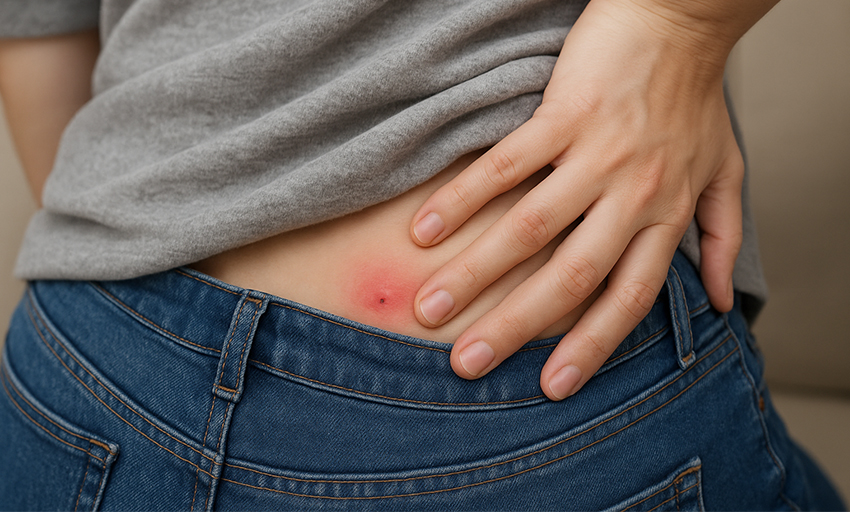
What Causes Pilonidal Sinus and Who Is at Risk?
The exact cause of pilonidal sinus is not fully understood; however, the most widely accepted theory is that it develops when hair penetrates the skin. Risk factors include:
- Gender: More common in men than in women.
- Age: Typically seen in young and middle-aged adults between 15 and 35 years old.
- Hairiness: Individuals with dense, coarse, and thick body hair are at higher risk.
- Sitting: Occupations or lifestyles that require prolonged sitting.
- Obesity: Being overweight.
- Hygiene: Inadequate cleanliness of the area.
- Genetic Predisposition: Family history of pilonidal sinus.
Symptoms
Pilonidal sinus may initially cause no symptoms. However, when it becomes infected, it can lead to:
- Pain and swelling in the sacrococcygeal area (tailbone region).
- Redness and tenderness in the affected area.
- Discharge: Foul-smelling, purulent (pus-filled), or bloody drainage.
- Fever (if the infection spreads).
- Discomfort while sitting or moving.
- Formation of multiple small openings or pits (sinus tracts).
Diagnosis
The diagnosis of pilonidal sinus is usually straightforward and made through a physical examination. The physician identifies sinus openings, swelling, redness, or discharge during the exam.
Treatment Options
Treatment depends on the stage and severity of the disease. It generally includes non-surgical (conservative) and surgical approaches.
1. Non-Surgical (Conservative) Treatment Options
These are preferred in cases without infection, with very mild symptoms, or when the patient is not a candidate for surgery. However, these methods usually do not provide a definitive cure and carry a higher risk of recurrence.
- Hygiene and Hair Removal: Keeping the area clean and dry, and removing hair with laser epilation or depilatory creams to help prevent recurrence.
- Antibiotics: Used to control infection in the presence of an acute abscess but do not eliminate the cyst itself.
- Abscess Drainage: In cases of acute, painful abscess, the abscess is incised under local anesthesia to drain the pus. This provides rapid pain relief but does not cure the disease, and further treatment may be necessary.
- Phenol Application (Crystallized Phenol): Involves injecting phenol—a chemical agent—into the sinus cavity to cauterize and destroy tissue and hair inside. This minimally invasive method has a short recovery time but a higher recurrence rate than surgical options.
- Laser Hair Removal: Since hair plays a major role in the disease’s development, permanent hair removal with laser is especially important in preventing postoperative recurrence.
- Pit Picking: Involves excising only the sinus openings with a small incision and cleaning out hair inside. Less invasive, but in deep or widespread sinuses, recurrence rates may be higher.
2. Surgical Treatment Options
The definitive treatment for pilonidal sinus is usually surgery. Several techniques exist, and the choice depends on the surgeon’s preference, as well as the severity and extent of the disease:
- Open Technique (Excision with Secondary Healing): The pilonidal sinus and surrounding diseased tissue are completely removed, and the wound is left open to heal naturally from the bottom up through granulation tissue formation. This method has a low recurrence rate but a long healing period (weeks) and requires regular wound care.
- Primary Closure (Excision with Primary Suturing): After removing diseased tissue, the wound edges are brought together and closed. Recovery is faster than with the open technique, but due to midline tension, there may be a slightly higher risk of infection and recurrence.
- Flap Techniques (Limberg Flap, Karydakis Flap, V-Y Advancement Flap, etc.): After excision, a flap of healthy nearby tissue is mobilized to cover the defect. These methods aim to accelerate wound healing and reduce tension, thereby lowering recurrence rates. They are especially preferred in larger lesions or recurrent cases. Flap surgeries are generally more complex but have better recovery times and lower recurrence rates compared to primary closure.
- Minimally Invasive Laser Treatments (LAPS, SiLaC): A fiber-optic laser probe is inserted into the sinus tract to destroy the internal tissue using laser energy and seal the cavity. This approach offers smaller incisions, less pain, and faster recovery but may not be suitable for all cases and requires specialized expertise.
Postoperative Recovery and Recurrence
Recovery time after surgery depends on the chosen technique. While open techniques may take weeks to heal, primary closure and flap methods usually allow faster recovery. Meticulous wound care, hygiene, and adherence to the surgeon’s recommendations are essential during recovery.
The likelihood of recurrence depends on the surgical method used, the surgeon’s experience, and the patient’s adherence to postoperative hygiene and hair control measures. Overall, recurrence rates vary between 5% and 30%. Hair removal (preferably laser epilation) and maintaining cleanliness significantly reduce the risk of recurrence.
Pilonidal sinus can cause considerable discomfort. If you have symptoms, it is important to consult a general surgeon for an accurate diagnosis and the most suitable treatment plan for your condition.
Contact
Feel free to reach out for a second opinion or to schedule an appointment.
You’re welcome to contact us directly with any questions you may have about diagnosis, treatment, or surgical procedures.